
 +86 15340683922
 +86 15340683922
الوصف
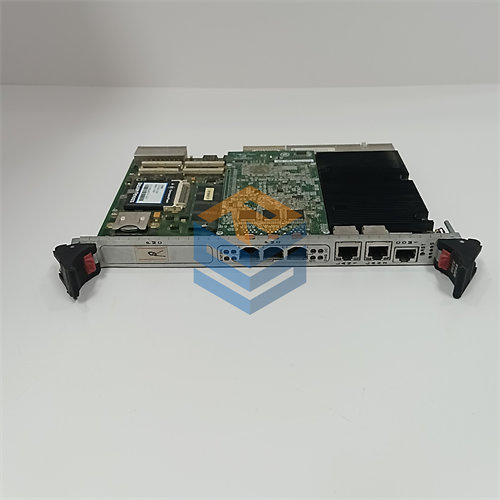
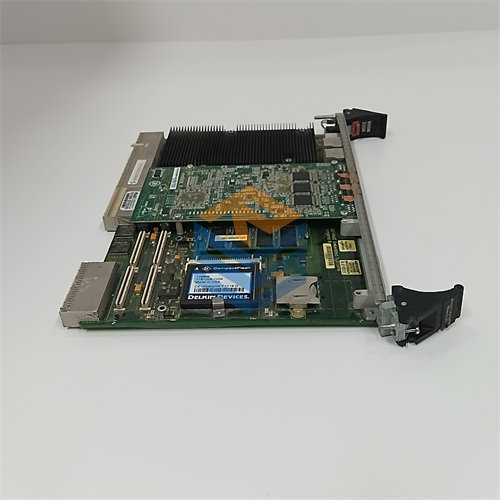
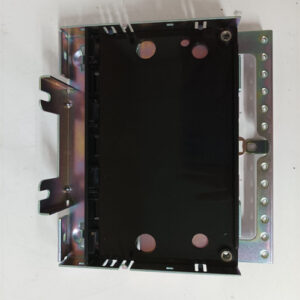
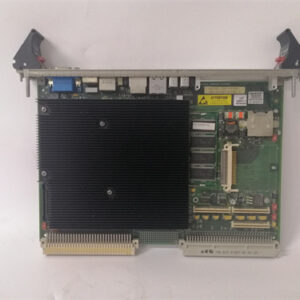
The GE DS200TBQAG1A is a Thermocouple Termination Module (often referred to as an RST Terminal Board with the functional acronym TBQA) designed for the General Electric (GE) Mark V Speedtronic Turbine Control System.1
Function and Purpose
The primary function of the 2$\text{DS200TBQAG1A}$ is to provide a termination and signal conditioning interface for thermocouple temperature sensors used on the turbine.3
- Thermocouple Termination: It serves as the physical connection point for the numerous thermocouple signal wires coming from the turbine to the control panel.4
- Cold Junction Compensation (CJC): The module is critical because it contains the circuitry for solid-state Cold Junction Compensation (CJC).5 Thermocouples measure temperature by sensing the difference between the hot junction (at the process) and the cold junction (at the board terminals). The CJC circuits on the $\text{TBQA}$ board accurately measure the ambient temperature at the terminals, allowing the control system to correctly calculate the actual process temperature.
- Signal Routing: It routes the compensated thermocouple signals to the main control boards, such as the TCQA (Thermocouple Q-Board), via ribbon cables and specific connectors.6
- Inputs: The board can typically handle a large number of thermocouple inputs (e.g., up to 7$\mathbf{45}$ inputs on some configurations), with groups of inputs feeding the different redundant controllers (8$\text{R}$, 9$\text{S}$, 10$\text{T}$ cores) in the 11$\text{Mark V}$ system.12
Hardware and Specifications
- Product Series: GE Mark V Speedtronic.13
- Functional Acronym: 14$\text{TBQA}$.15
- Physical Interface: The board features 16$\mathbf{2}$ terminal blocks (labeled 17$\text{TB1}$ and 18$\text{TB2}$) to accommodate the field wiring, as well as multiple 20-pin connectors for ribbon cables to connect to other internal control cards.19
- Redundancy: In the $\text{Mark V}$ system, different versions of this board or its inputs are often distributed across the redundant control cores ($\text{R}$, $\text{S}$, $\text{T}$) to ensure a fault-tolerant temperature monitoring system.