
 +86 15340683922
 +86 15340683922
الوصف
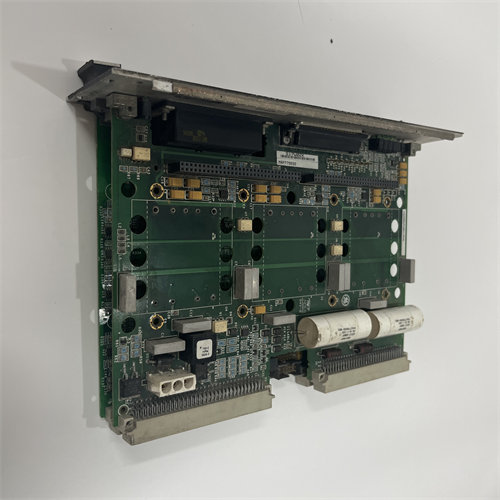
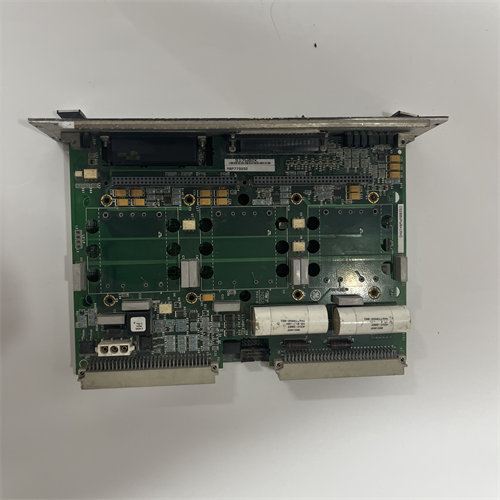
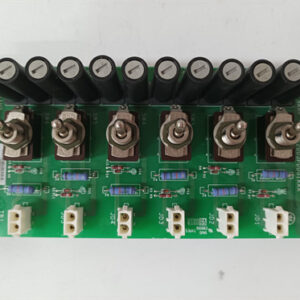
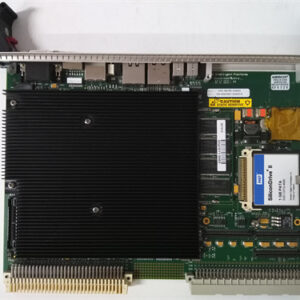
The GE 1$\text{DS200TCCBG3B}$ is a Common Extended Analog 2$\text{I/O}$ Board for the General Electric Speedtronic 3$\text{Mark V}$ Turbine Control System.4
This board is a crucial interface for expanded signal processing, serving to condition and scale various analog signals from field devices before they are used by the $\text{Mark V}$‘s main control processors ($\text{R}$, $\text{S}$, and $\text{T}$). The ‘$\text{G3B}$‘ in the part number indicates it is a later revision ($\text{G3}$ group, $\text{B}$ revision) of the extended analog $\text{I/O}$ card.
💡 Function and Purpose
The primary function of the $\text{DS200TCCBG3B}$ is to read and process a supplemental set of analog signals that are essential for turbine and generator monitoring, particularly those involving high-fidelity measurements.
Signal Types Processed
- Temperature Inputs ($\text{RTD}$s): It processes signals from Resistance Temperature Detectors ($\text{RTD}$s) to monitor critical temperatures within the turbine, generator, or bearings.
- Current Inputs ($\text{mA}$): It conditions and scales standard industrial signals, such as $\text{4-20 mA}$ and $\text{0-1 mA}$ current loop inputs, used for transmitters measuring pressure, flow, and level.
- Generator and Electrical $\text{I/O}$: It is vital for generator control functions by handling the conditioning and scaling of:
- Potential Transformer ($\text{PT}$) inputs for bus and generator voltage signals.
- Current Transformer ($\text{CT}$) inputs for line current signals.
- The board performs the necessary software-based transducing and calculations to convert these electrical measurements into usable control data.
System Location
As a 5$\text{TCCB}$ board (TC2000 Common Extended Analog Board), it typically resides in a core module within the 6$\text{Mark V}$ cabinet, such as the 7$\text{R5}$ core, where it communicates with its dedicated terminal board (e.g., 8$\text{TBCB}$) via ribbon cables to receive the raw field signals.9
💻 Technical Features
The $\text{DS200TCCBG3B}$ contains its own local intelligence to execute I/O processing independent of the main turbine control algorithms:
- Microprocessor: It features an onboard 10$\text{80196}$ Microprocessor to manage signal conditioning, scaling, and communication with the main control processors.11
- Memory: Multiple 12$\text{PROM}$ modules store the board’s firmware and are critical for its specific configuration.13 When replacing the board, these $\text{PROM}$s or the configuration file must be correct for the specific turbine application.
- Connectivity: The board has several multi-pin connectors (such as 14$\text{JCC}$ and 15$\text{JDD}$) for ribbon cable connections to power supplies and its associated terminal boards.16
- Revision ($\text{G3B}$): The ‘$\text{G3}$‘ group represents a functional update to the board’s design compared to the older $\text{G1}$ or $\text{G2}$ versions, offering enhanced features or component updates while maintaining backwards-compatibility where possible. The ‘17$\text{B}$‘ is a minor hardware or artwork revision.18