
 +86 15340683922
 +86 15340683922
الوصف
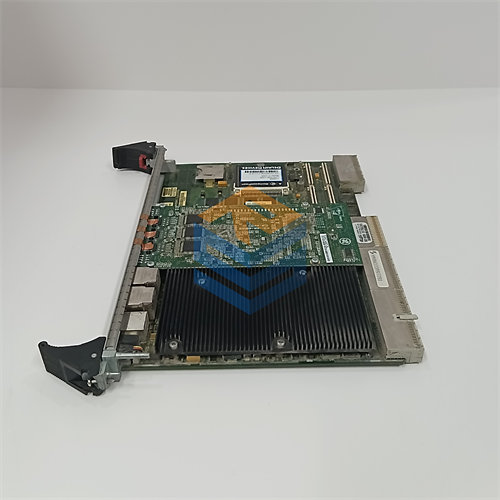
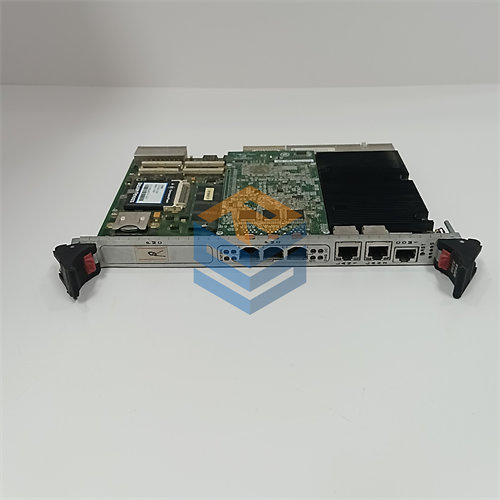
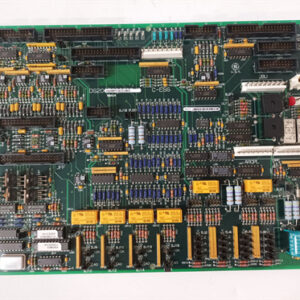
The GE $\text{DS200TCCBG3BED}$ is a highly-revised version of the Common Extended Analog $\text{I/O}$ Board (also known as the $\text{I/O TC2000}$ Analog Board) designed for the General Electric $\text{Mark V}$ Speedtronic Turbine Control System.
This board is a crucial microprocessor-based component that handles the signal conditioning and conversion for supplementary analog measurements, which are vital for the reliable control and protection of industrial gas, steam, and wind turbines.
🔬 Core Function and Design
The $\text{DS200TCCBG3BED}$ board’s primary function is to acquire, scale, and digitize additional analog input/output signals that the main $\text{Mark V}$ control processors ($\text{R}$, $\text{S}$, $\text{T}$) rely on.
- Signal Handling: It is responsible for processing signals from devices like Resistance Temperature Detectors ($\text{RTD}$s), and various current inputs (typically $\text{4-20 mA}$ / $\text{0-1 mA}$), as well as scaled inputs for Generator/Bus Voltage and Line Current.
- Signal Path: The board receives the raw signals from terminal boards (e.g., $\text{TBCB}$, $\text{TCEB}$) and prepares them for the main control system. The conditioned digital data is then transmitted to the $\text{STCA}$ board via the $\text{3PL}$ connector on the COREBUS.
- Onboard Processing: It features an $\text{80196}$ microprocessor and multiple $\text{PROM}$ modules. This processor executes software transducers to mathematically manipulate the isolated and scaled analog inputs, converting them to digital values used in control calculations (e.g., calculating generator Megawatts, VARs, and Power Factor).
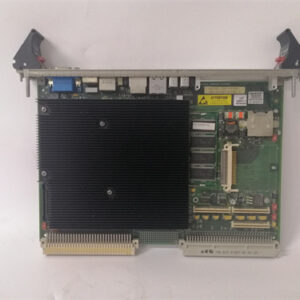
- Hardware: The board is equipped with multiple connectors, including two $\text{50-pin}$ connectors ($\text{JCC}$ and $\text{JDD}$), $\text{5}$ $\text{34-pin}$ connectors, and a status LED for basic functional diagnostics.
🏷️ Revision Details ($\text{G3BED}$)
The specific part number $\text{DS200TCCB}\textbf{G3BED}$ indicates it is a late and highly refined revision:
- $\text{TCCB}$: The functional acronym (Common Extended Analog $\text{I/O}$ Board).
- $\text{G3}$: The Group $\text{3}$ hardware design.
- $\text{B}$ (First $\text{B}$): The Functional Revision.
- $\text{E}$ (Second $\text{E}$): A subsequent functional revision.
- $\text{D}$ (Third $\text{D}$): Another minor functional or artwork revision.
The multiple trailing letters signify that the original $\text{G3}$ board has gone through several updates and enhancements. When replacing a board in a live system, the best practice is to always transfer the $\text{PROM}$ modules from the old board to the new one to ensure the replacement retains the correct, site-specific firmware and application instructions.