
 +86 15340683922
 +86 15340683922
الوصف
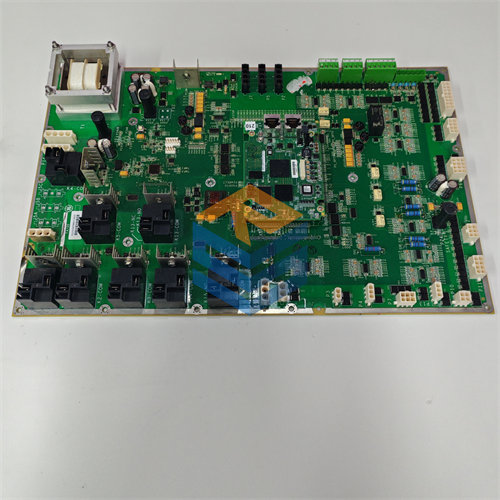
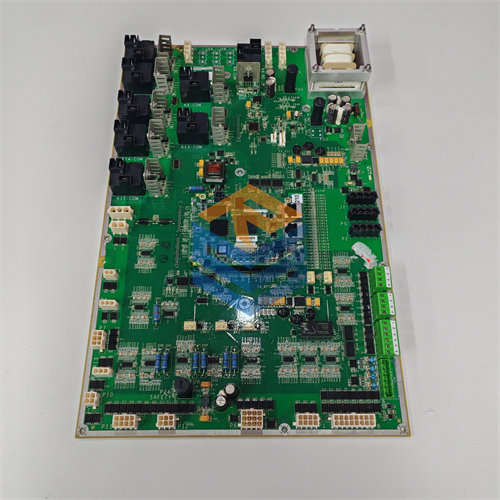
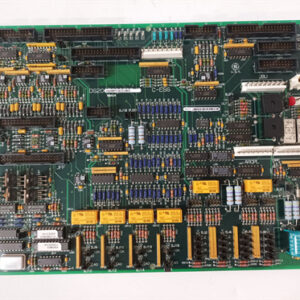
The GE DS200TCEAG1A is a critical safety component known as the Emergency Overspeed Board for the GE Speedtronic Mark V Turbine Control System.1
Its primary and most important role is to provide high-speed, independent protection against catastrophic failures like turbine overspeed.2 It’s often referred to as a Protective Processor because it acts independently of the main control processor to ensure trip logic is executed quickly.3
🛡️ Primary Function and Safety Role
The DS200TCEAG1A board resides within the **Protective Core (4$\text{P}$) ** of the Mark V system, which is designed to operate with a high degree of independence and redundancy (in Triple Modular Redundant or TMR systems) from the main control system.5
- Emergency Overspeed Protection: This is the board’s paramount function.6 It receives and processes signals from speed sensors to constantly monitor the turbine’s shaft speed. If the speed exceeds a pre-set emergency trip limit, the board will initiate a turbine trip (shutdown) to prevent severe mechanical damage or failure.7
- Trip Signal Processing: It is responsible for processing other critical trip signals, notably flame detection trip signals in gas turbines.8
- Signal Conditioning and Scaling: The board takes raw signals for functions like low/high shaft speed and automatic synchronization, conditions and scales them, and then writes this data to other system boards (like the STCA board) over the IONET for use by the main control engine.9
- Turbine Trip Coordination: The TCEA board can send emergency trip signals to the Turbine Trip Board (TCTG).10 In TMR systems, the TCTG can use a 2-out-of-3 (2/3) voting logic from the redundant TCEA boards to definitively determine if a trip should be executed, enhancing reliability.11
🛠️ Key Components and Features
| Component | Description |
| Microprocessor | Features an Intel 80196 microprocessor which is the core intelligence for processing the overspeed and trip logic. |
| Memory | Includes sockets for multiple Programmable Read-Only Memory (PROM) modules. These modules store the board’s firmware and operating instructions, which must be transferred from the old board when replacing the unit. |
| Connections | Features numerous connectors for system interfacing, including dedicated connections for power (J7), signal connections to the TCEB board (JK and JW for flame detection), the TCTG board (JL for trip signals), and the IONET (JX1 and JX2). |
| Configuration | Equipped with a significant number of hardware components for configuration, including approximately 30 jumpers and several fuses for component protection. |
| Functional Acronym | The board’s functional acronym is TCEA. |