
 +86 15340683922
 +86 15340683922
الوصف
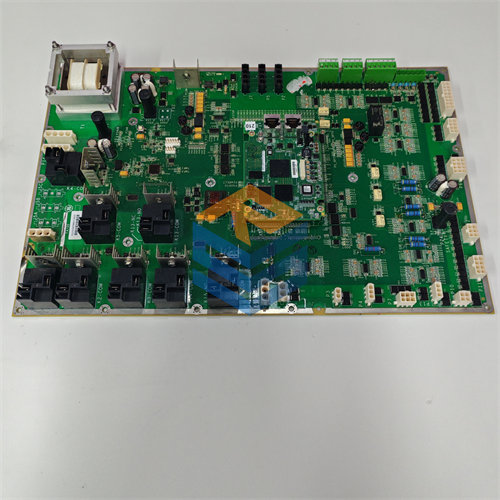
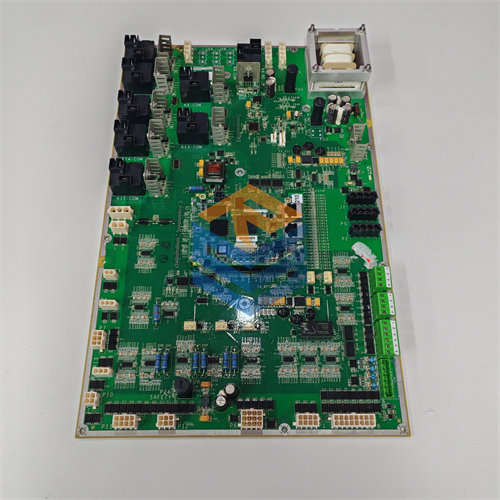
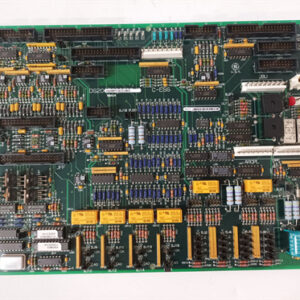
The GE DS200TCEAG1BJE is an Emergency Overspeed Board (Functional Acronym: TCEA) designed for the General Electric Speedtronic Mark V Gas Turbine Control System.1
It serves as a critical, high-speed, and independent safety processor, often referred to as a Protective Processor, whose sole purpose is to monitor and protect the turbine from catastrophic failure.2
🛡️ Key Role in Turbine Safety
The DS200TCEAG1BJE is installed in the Mark V system’s Protective Core (3$\text{P1}$), where three identical TCEA boards are typically used in a Triple Modular Redundancy (TMR) configuration (often labeled X, Y, and Z).4
Its main functions are:
- Emergency Overspeed Protection: It constantly monitors the turbine’s rotational speed.5 If the speed exceeds the emergency trip setpoint, the board generates a trip signal to shut down the unit immediately, preventing mechanical damage.6
- Flame Detection: It processes signals related to flame detection and can initiate a trip if it detects a loss of flame in the gas turbine combustion section.7
- High and Low Shaft Speed Monitoring: The board is used to condition, scale, and transmit signals for various shaft speed monitoring functions.8
Triple Modular Redundancy (TMR)
In the Mark V system, the three TCEA boards operate in parallel:
- Each of the three boards receives its own set of inputs (like speed signals).
- The data from the three TCEA boards is sent to an 9$\text{I/O}$ engine, which performs a median selection (voting) on the values.10
- The voted result is then transferred to the main control engine.
- For trip initiation, the TCEA boards send signals to the Turbine Trip Board (TCTG). The TCTG then uses a 2/3 relay driver-level voting to determine whether the final unit trip should occur, ensuring a trip only happens if at least two of the three protective processors agree.
📝 Hardware and Revisions
The part number $\text{DS200TCEAG1BJE}$ indicates specific hardware and software revisions:
- DS200TCEA: Denotes the Series and the core function (Emergency Overspeed Board).
- G1: Board generation/version.
- BJE: Represents a series of specific revisions to the original design (e.g., $\text{B}$-rated primary functional revision, $\text{J}$-rated secondary functional revision, and $\text{E}$-rated artwork revision). These revisions indicate changes in functionality, hardware placement, or component type compared to earlier versions (like $\text{DS200TCEAG1}$ or $\text{DS200TCEAG1B}$).
Like its sister boards, the $\text{BJE}$ model contains:
- A dedicated microprocessor.
- Multiple sockets for Programmable Read-Only Memory (PROM) modules that store the firmware.
- Configuration elements like jumpers (berg jumpers) and fuses.
If you are replacing this board, you must transfer the PROM modules from the old board to the new one and ensure the jumpers are set according to your system’s configuration to maintain the correct operational logic.