
 +86 15340683922
 +86 15340683922
الوصف
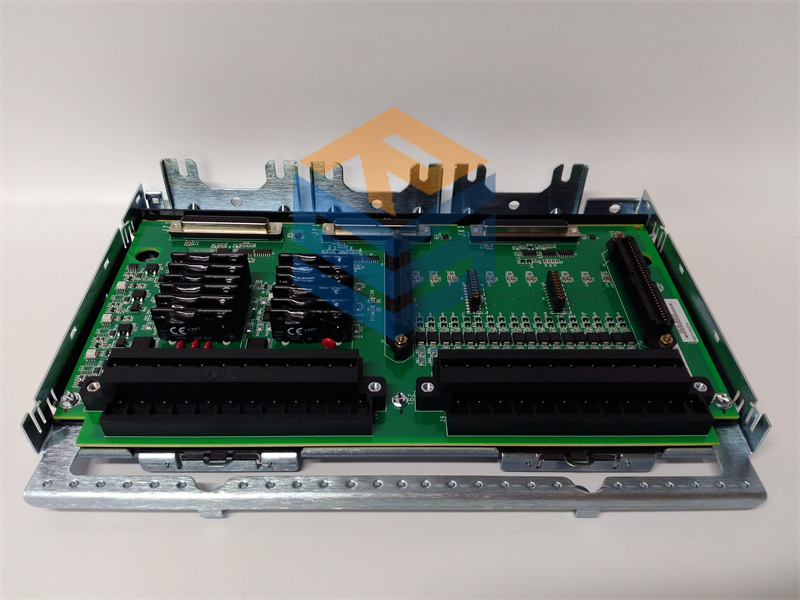
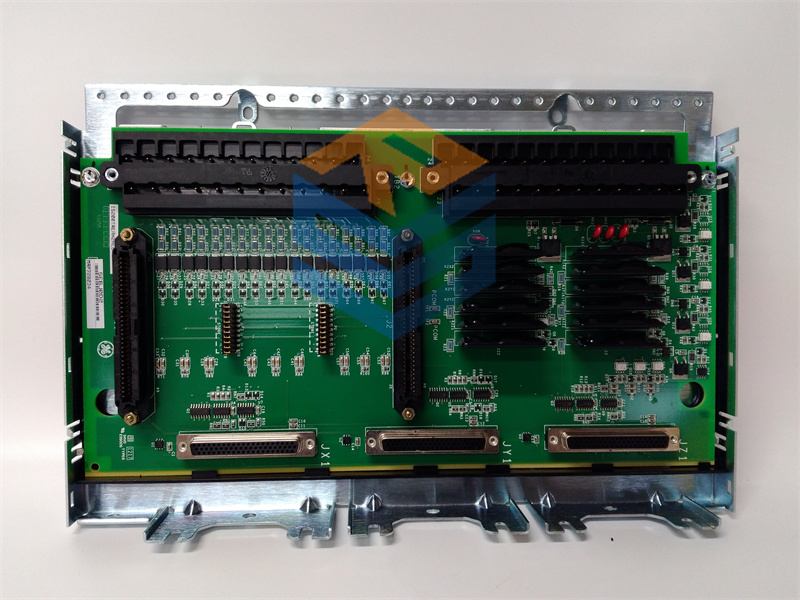
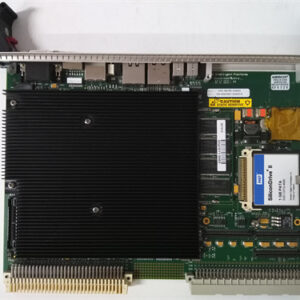
The GE DS200TCEBG1ACD Protective Termination Expander Board (TCEB) is a specific revision of a critical circuit board used in the General Electric Mark V Speedtronic Turbine Control System.
The alphanumeric suffix G1ACD indicates its specific revision level. While the core function remains the same across the TCEB product line, these revisions often introduce minor component, layout, or functionality changes.
⚙️ Primary Function and Role
The Protective Termination Expander Board (TCEB) is a key interface board in the Mark V system, primarily responsible for signal conditioning, routing, and protection for vital turbine and generator measurements.1
- Signal Scaling/Conditioning: The TCEB is designed to scale and condition signals from the Potential Transformers (PT) and Current Transformers (CT).2 These signals represent the generator and bus voltages and the line current.3 The conditioned signals are then routed to the TCCB (Turbine Core Control Board) for use in control algorithms and monitoring.4
- Protection Signal Routing: It acts as a pathway for critical safety signals, such as those for emergency overspeed magnetic pick-up and flame detection.5 These signals originate from the PTBA terminal board and are passed through the TCEB to the TCEA (Emergency Overspeed) boards for processing in the system’s Triple Modular Redundancy (TMR) structure.6
- Flame Detector Power: It conditions and routes the 335 V DC power necessary to operate the Ultra-Violet (UV) flame detector devices.7
- Audible Alarm: The board is known to include the audible alarm horn for the Mark V LM version of the control system.8
- Physical Location: It is typically located in the P1 core of the Mark V panel.9
🔌 Hardware Specifications (Common to TCEB G1 Revisions)
The physical structure is designed to interface with other Mark V boards via multiple high-density connectors:10
| Component / Connector | Count | Function (Examples) |
| Signal Transformers | 4 | Improves signal compatibility between devices. |
| Bayonet Connectors | 3 | Used for connecting certain high-speed signals (e.g., JWX, JWY, JWZ). |
| Ribbon Cable Connectors | 3 (20-pin) | Transmits emergency overspeed and flame detect signals to TCEA boards (JKX, JKY, JKZ). |
| Other Connectors | 1 (26-pin) & 4 (10-pin) | Includes connections for PT/CT signals (JMP to TCCB, JV from PTBA) and 335 VDC power (JVA). |
The board itself is an important component of the turbine’s control and protection system, playing a non-configurable hardware role in managing critical data flow.
The GE DS200TCEBG1ACD Protective Termination Expander Board (TCEB) is a specific revision of a critical circuit board used in the General Electric Mark V Speedtronic Turbine Control System.
The alphanumeric suffix G1ACD indicates its specific revision level. While the core function remains the same across the TCEB product line, these revisions often introduce minor component, layout, or functionality changes.
⚙️ Primary Function and Role
The Protective Termination Expander Board (TCEB) is a key interface board in the Mark V system, primarily responsible for signal conditioning, routing, and protection for vital turbine and generator measurements.1
- Signal Scaling/Conditioning: The TCEB is designed to scale and condition signals from the Potential Transformers (PT) and Current Transformers (CT).2 These signals represent the generator and bus voltages and the line current.3 The conditioned signals are then routed to the TCCB (Turbine Core Control Board) for use in control algorithms and monitoring.4
- Protection Signal Routing: It acts as a pathway for critical safety signals, such as those for emergency overspeed magnetic pick-up and flame detection.5 These signals originate from the PTBA terminal board and are passed through the TCEB to the TCEA (Emergency Overspeed) boards for processing in the system’s Triple Modular Redundancy (TMR) structure.6
- Flame Detector Power: It conditions and routes the 335 V DC power necessary to operate the Ultra-Violet (UV) flame detector devices.7
- Audible Alarm: The board is known to include the audible alarm horn for the Mark V LM version of the control system.8
- Physical Location: It is typically located in the P1 core of the Mark V panel.9
🔌 Hardware Specifications (Common to TCEB G1 Revisions)
The physical structure is designed to interface with other Mark V boards via multiple high-density connectors:10
| Component / Connector | Count | Function (Examples) |
| Signal Transformers | 4 | Improves signal compatibility between devices. |
| Bayonet Connectors | 3 | Used for connecting certain high-speed signals (e.g., JWX, JWY, JWZ). |
| Ribbon Cable Connectors | 3 (20-pin) | Transmits emergency overspeed and flame detect signals to TCEA boards (JKX, JKY, JKZ). |
| Other Connectors | 1 (26-pin) & 4 (10-pin) | Includes connections for PT/CT signals (JMP to TCCB, JV from PTBA) and 335 VDC power (JVA). |
The board itself is an important component of the turbine’s control and protection system, playing a non-configurable hardware role in managing critical data flow.