
 +86 15340683922
 +86 15340683922
الوصف
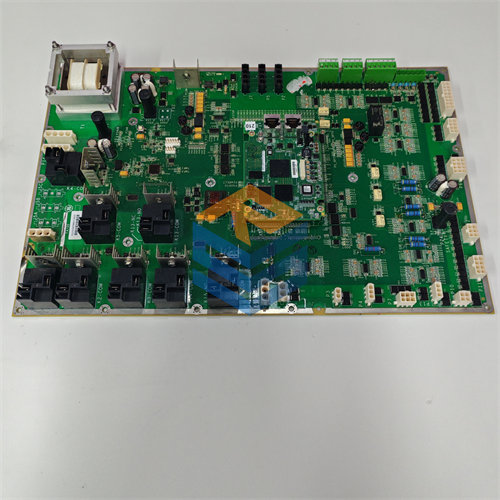
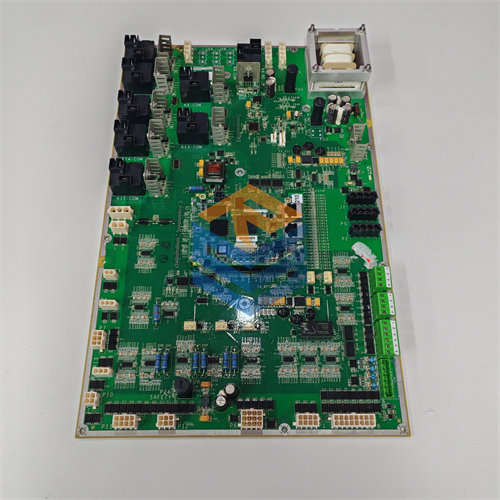
That’s an excellent piece of hardware you’re asking about! The GE DS200TCQAG1BHF is a critical component of the General Electric Mark V Speedtronic Turbine Control System.
This board is a highly specialized, multi-function RST Analog I/O Board, also identified by its functional acronym, TCQA. The “BHF” in the part number indicates a specific hardware and firmware revision crucial for system compatibility and performance.
⚙️ Product Overview: DS200TCQAG1BHF (TCQA)
The DS200TCQAG1BHF is one of the main analog interface cards in the Mark V’s I/O section. It plays a dual role: it conditions and scales a large variety of analog sensor signals coming into the system and provides analog control outputs to field devices like servo valves.
As an RST board, it is designed for use in the Triple Modular Redundancy (TMR) architecture of the Mark V. In a full TMR system, three identical boards (one in each R, S, and T core) operate simultaneously, ensuring that if one board fails, the other two can “vote” and maintain control without interruption.
Key Technical Features
| Feature | Description |
| Functional Acronym | TCQA (Analog I/O Board) |
| System | GE Mark V Speedtronic Turbine Control System |
| Part Revision | BHF (A specific hardware/artwork revision) |
| Redundancy | Designed for use in RST (TMR) I/O cores. |
| Core Connectors | 3PL connector is the critical Data Bus connecting the TCQA to the STCA (I/O Engine) board. |
| LEDs & Jumpers | Includes six LEDs for visual status indication and six jumpers (e.g., J1, J2, J5, J6) for configuring hardware settings like the milliamp output current range (20 mA or 200 mA). |
| Temperature Range | Typically rated for industrial use, e.g., $-20^\circ \text{C}$ to $+70^\circ \text{C}$ operational range. |
🔌 Signal Processing Functions
The TCQA board’s primary role is to act as the accurate, high-speed interface for critical turbine signals.
1. Analog Inputs & Conditioning
- Thermocouple (TC) Inputs: The board features built-in circuitry for Cold Junction Compensation (CJC). This is essential for accurately measuring high turbine temperatures, as it corrects the voltage reading based on the temperature at the thermocouple connection point.
- 4-20 mA Inputs: It scales and conditions standard industrial current loop signals from various field instruments (e.g., fuel flow pressure, compressor stall detection sensors).
- Voltage Inputs: Handles DC voltage signals (e.g., $\pm10 \text{V}$ DC) used in some applications.
- LVDT/LVDR Inputs: Critically, it processes the signals from Linear Variable Differential Transformers (LVDTs) or Rotary Variable Differential Transformers (LVDRs), which precisely monitor the position of turbine control valves and stop valves.
- Vibration Inputs: The board is also capable of reading and conditioning vibration signals, often working in conjunction with dedicated protection systems like Bently Nevada.
2. Analog Outputs
- Servo Valve Outputs: The DS200TCQAG1BHF provides the high-precision analog current or voltage signals necessary to drive servo valves. These valves control the flow of hydraulic fluid, which in turn positions the main control valves that regulate fuel or steam flow into the turbine. Accurate servo output is vital for speed and load control.
- 4-20 mA Outputs: Provides scaled current outputs to drive proportional actuators or indicate internal control variables to other systems.
🛠️ The Importance of the ‘BHF’ Revision
In the world of GE Mark V, the suffix (like A, B, BHF, BEC, etc.) is not merely a version number; it indicates a specific Bill of Materials (BOM) and often dictates the exact software/firmware constants required for the Mark V’s I/O configuration editor.
When replacing a DS200TCQAG1BHF, it’s crucial to match the revision as closely as possible. Using an incompatible revision (e.g., TCQAG1A) might lead to:
- Calibration Issues: Incorrect scaling of analog signals.
- Incompatibility: Incorrect jumper settings or minor hardware differences that affect signal integrity.
- System Diagnostics: The controller may report a hardware mismatch or fail to initialize the I/O core.