
 +86 15340683922
 +86 15340683922
الوصف
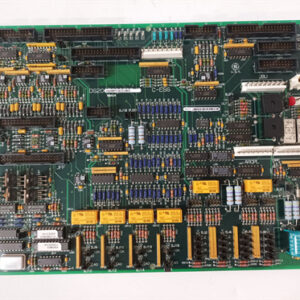
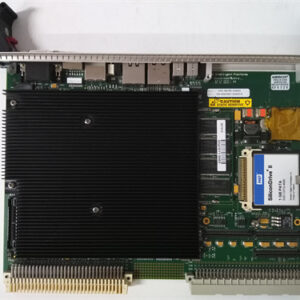
The GE DS200TCQBG1 is identified as an Analog Extender Card for the GE Mark V Speedtronic Turbine Control System.
It is important to clarify the function implied by its part number structure, which includes the functional acronym TCQB (similar to the TCQA analog I/O board but typically associated with a different set of signals) and the term “Extender Card.”
Here is a detailed analysis of the DS200TCQBG1:
🛠️ Product Profile: GE DS200TCQBG1 (TCQB Extender Card)
The term “Extender Card” typically refers to a printed circuit board that serves one of two main purposes in industrial control cabinets like the Mark V:
- Test/Diagnostic Aid: An elongated PCB used to temporarily extend a main I/O board (like a TCQA or STCA) out of its backplane slot. This allows technicians to physically probe test points and diagnose signals while the host board remains electrically connected and running, which is crucial for troubleshooting in live systems.
- Signal Multiplexer/Distributor: A board that expands the I/O capacity or routing capabilities from the main core boards to the terminal boards (e.g., TBQA/TBQC).
Given the TCQB designation, the board is deeply integrated with the Mark V’s I/O functionality.
| Specification | Detail |
| Functional Designation | TCQB (Turbine Control Q/R/S/T Board, or related to I/O expansion) |
| Part Name | Analog Extender Card / Circuit Card Assembly |
| System | GE Speedtronic Mark V Turbine Control System |
| Revision Level | G1 (First major hardware revision) |
| Architecture | RST (Used in Triple Modular Redundancy – TMR) |
| Typical Function | Facilitates testing, or expands the Analog/Pulse I/O capabilities, likely dealing with speed sensors, generator signals, or specific pulse inputs. |
1. Role as a Test Extender (Most Likely Interpretation)
If the board is a true Test Extender Card, its purpose is purely diagnostic:
- Live Troubleshooting: It is inserted between the active I/O board (e.g., DS200TCQAG1) and the backplane. This positions the active board outside the rack, making its components, LEDs, and test points accessible for voltmeter probes or oscilloscopes while the turbine is operational.
- Preventing Downtime: By allowing live diagnosis, it helps engineers find intermittent issues without having to shut down the redundant core or the entire turbine.
- Pin-for-Pin Match: A test extender must have a perfect pin-for-pin electrical match to the backplane and the board being tested to maintain signal integrity and power distribution.
2. Role as an I/O Extender/Expander (Alternative Interpretation)
Less commonly, an “extender” in this context might refer to a passive or semi-active board used to expand the connectivity of the main TCQA or TCQC boards:
- Signal Routing: It could be a simple interface used to route a specialized group of analog or pulse signals from the main I/O bus to a dedicated terminal board that handles unique inputs (e.g., specific pulse rate inputs or non-standard temperature sensors).
- Buffering: It may contain basic buffering circuits to ensure signal strength is maintained over longer communication paths within the Mark V cabinet.
3. The TCQB Context
The presence of TCQB often implies a focus on signals different from the core LVDT/Thermocouple functions of the TCQA board. TCQB functionalities sometimes include:
- Pulse Rate Inputs: Processing signals from magnetic pickups or proximity probes for turbine and generator speed/overspeed protection.
- Generator and Line Signals: Interfacing with signals related to the generator, such as voltage and current measurements for synchronization and protection.