
 +86 15340683922
 +86 15340683922
الوصف
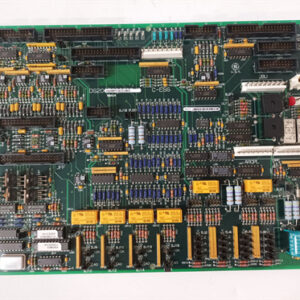
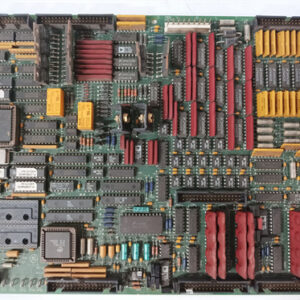
The GE DS200TCQBG1AFB is a highly specific circuit board for the GE Mark V Speedtronic Turbine Control System.
It is best identified as an Extended Analog I/O Board or a Specialized I/O Board within the system’s Triple Modular Redundancy (RST) architecture. The “TCQB” functional acronym suggests it handles specialized inputs, often related to pulse rate (speed) and specific analog extensions, complementing the main Analog I/O board (TCQA).
🛠️ Product Identification: DS200TCQBG1AFB
| Specification | Detail |
| Functional Acronym | TCQB (Turbine Control I/O, often Pulse/Special Analog) |
| System Series | GE Mark V Speedtronic Turbine Control |
| Board Type | Extended/Specialized Analog I/O Board |
| Architecture | RST (Used in the redundant R, S, and T control cores) |
| Hardware Revision | G1A (Major revision) |
| Firmware/Artwork Revision | FB (Specific minor revision code, crucial for compatibility) |
| Purpose | Conditions and scales specific analog and pulse signals, providing additional I/O capacity beyond the main TCQA board. |
🔌 Primary Functions and Context
Unlike the generic “Analog I/O Card” (TCQA), the TCQB board typically addresses more niche and high-speed inputs critical to turbine operation.
1. Pulse Rate and Speed Signals
In many Mark V configurations, the TCQB is the primary interface for pulse rate (speed) inputs. These signals come from magnetic pickups or proximity probes that measure the rotational speed of the turbine shaft and the generator.
- Overspeed Protection: The accuracy and speed of signal processing on the TCQB are vital for the turbine’s overspeed protection logic, which must trip the unit quickly and reliably if speed limits are exceeded.
- Speed Control: The processed speed data is essential for governor control loops that regulate fuel flow during startup, synchronization, and load changes.
2. Analog Extension
The “Extended Analog I/O” designation implies that the board may also provide extra analog inputs or outputs for signals not handled by the main TCQA board.
- This might include specialized $\pm 5 \text{V}$ or $\pm 10 \text{V}$ inputs, or low-voltage DC signals associated with auxiliary systems like the exciter or fluid systems.
3. RST Redundancy
As an RST board, three identical DS200TCQBG1AFB cards would be installed in the R, S, and T cores. Each board processes its set of redundant signals independently. The results are then transmitted via the internal data bus to the core’s processor (STCA or UCCC), where the system’s voter logic compares the three results for validation before any control action is executed.
4. Compatibility (Revision AFB)
The revision code AFB is extremely important. When replacing this component, the replacement card must have the same or a highly compatible revision code. Mismatched revisions (especially in the firmware/artwork layer) can cause communication failures or incorrect signal interpretation, potentially leading to system instability or trips.