
 +86 15340683922
 +86 15340683922
الوصف
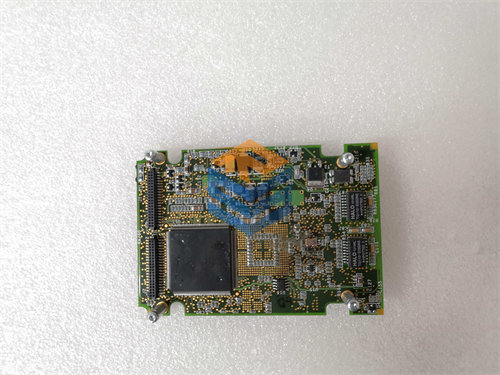
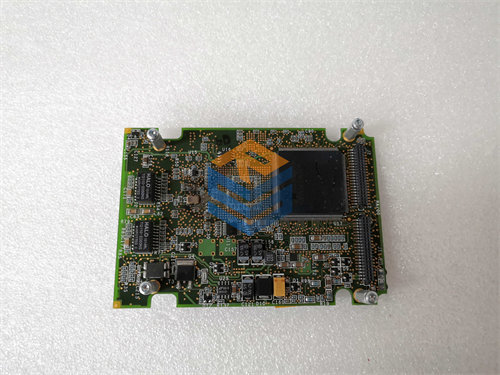
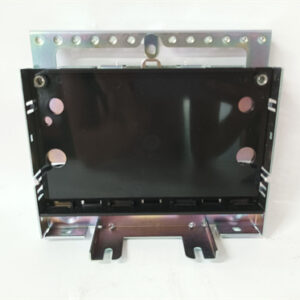
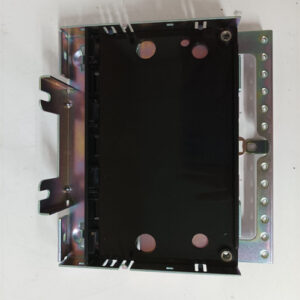
The GE DS200TCQBG1B is a highly specialized circuit board used within the GE Mark V Speedtronic Turbine Control System.
It is correctly identified as an Extended Analog I/O Board or a Specialized I/O Board within the system’s Redundant (RST) control architecture. The functional acronym TCQB indicates that this board handles a particular set of analog and often pulse-rate (speed) inputs, complementing the core analog I/O functions handled by the TCQA board.
Here is a detailed analysis of the DS200TCQBG1B:
🛠️ Product Identification: DS200TCQBG1B
| Specification | Detail |
| Functional Designation | TCQB (Turbine Control I/O Board) |
| System Series | GE Mark V Speedtronic Turbine Control |
| Board Type | Extended/Specialized Analog & Pulse I/O |
| Architecture | RST (Triple Modular Redundancy – TMR) |
| Hardware Revision | G1 (Main design revision) |
| Artwork/Component Revision | B (Specific minor revision code) |
| Primary Context | Handling high-speed pulse inputs (speed) and specific non-standard analog signals. |
🔌 Key Functions and Role in the Mark V System
The TCQB board serves a critical, though specialized, role in ensuring the turbine operates safely and efficiently.
1. Pulse Rate (Speed) Signal Processing
The most common and critical function associated with the TCQB board is the processing of pulse-rate inputs, which are essential for measuring turbine and generator speed:
- Speed Sensors: It receives signals from magnetic pickups or proximity probes mounted near the turbine shaft.
- Overspeed Protection: The board’s fast processing time and reliability are crucial for the overspeed protection system. The speed signals are processed in parallel across the three RST cores, and the TMR system uses the voter logic to determine the valid speed, which initiates a fast trip if critical limits are exceeded.
- Governor Control: The accurate speed data is fed to the central controller for the governor to regulate fuel/steam flow and maintain synchronous speed.
2. Extended Analog and Special Signals
The “Extended Analog I/O” label suggests it handles signals that are separate from the core LVDT and standard Thermocouple inputs typically managed by the TCQA board. This might include:
- Specialized analog inputs/outputs with unusual voltage or current ranges.
- Certain generator and line signals used for synchronization and protection.
3. RST Redundancy
As an RST component, the DS200TCQBG1B operates in parallel in the R, S, and T control cores.
- Each of the three cards independently processes its assigned sensor data.
- Data is passed to the core’s processor (STCA) via the internal bus (usually the 3PL connector).
- The system continually compares the three independent signals to eliminate the effect of any single component failure (a “voted” output), thereby maintaining system uptime.
4. Revision ‘B’ Compatibility
The revision B indicates a specific set of components and board layout. When procuring or repairing this part, it is essential to match the revision code. Using a mismatched revision (e.g., G1A instead of G1B) can lead to:
- Software Mismatches: The PROM firmware on the main controller (STCA) may be configured to expect the “B” revision’s specific hardware characteristics.
- Signal Integrity Issues: Minor differences in analog component tuning or filtering could lead to inaccurate speed or analog readings.