
 +86 15340683922
 +86 15340683922
الوصف
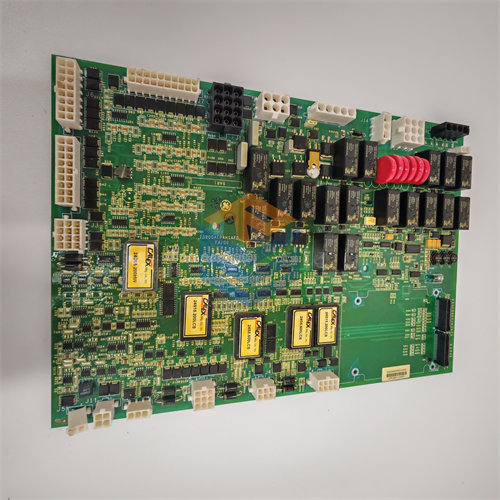
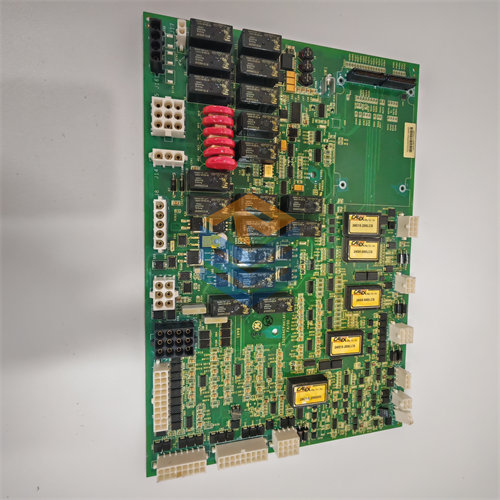
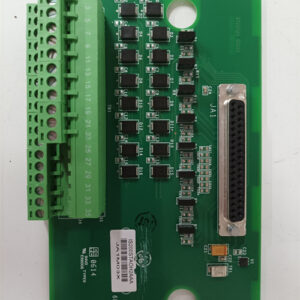
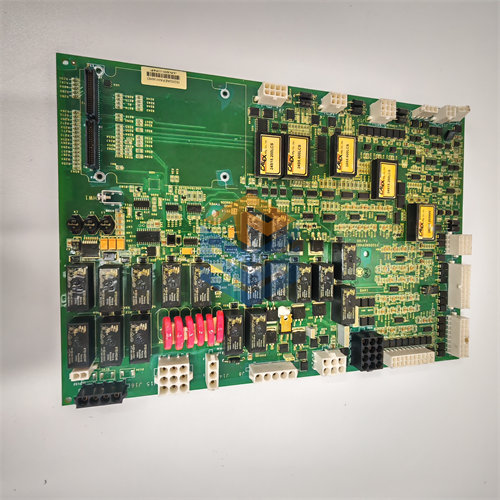
The GE DS200TCQBG2A is an Extended Analog I/O Board for the GE Mark V Speedtronic Turbine Control System.
This board is part of the second major hardware generation (G2) of the TCQB series, meaning it represents an updated version of the G1 boards you inquired about previously, likely with updated components or layout.
Here is a detailed summary of the board’s function and key characteristics:
🛠️ Product Profile: DS200TCQBG2A
| Specification | Detail |
| Functional Designation | TCQB (Turbine Control Q/R/S/T Board) |
| System Series | GE Mark V Speedtronic Turbine Control |
| Board Type | Extended/Specialized Analog I/O Board |
| Hardware Revision | G2 (Second major revision, post-G1) |
| Artwork/Component Revision | A (Specific minor revision code) |
| Architecture | RST (Triple Modular Redundancy – TMR) |
| Primary Function | Processing high-speed pulse rate (speed) signals and providing additional analog I/O capacity. |
1. Core Function: Speed Input Processing
Similar to the G1 versions, the TCQB board is crucial for handling high-frequency sensor inputs:
- Pulse Rate: It receives and conditions signals from magnetic pickups or proximity probes that monitor the rotational speed of the turbine and generator shafts.
- Safety Criticality: The TCQB board’s performance is fundamental to the overspeed protection logic and the accuracy of the main speed control (governor) loops.
2. Extended Analog I/O Capacity
The board provides an extension of the I/O capabilities beyond the main TCQA (Analog I/O) board. This is typically used for:
- A larger number of sensors than the standard I/O structure can accommodate.
- Specialized analog inputs/outputs that require different signal conditioning (e.g., non-standard voltage ranges).
3. The G2 Revision
The jump from G1 (e.g., DS200TCQBG1B) to G2 (DS200TCQBG2A) usually signifies:
- Component Obsolescence Resolution: Updating or replacing older, obsolete integrated circuits (ICs) and discrete components with newer, commercially available parts.
- Improved Design: Potential enhancements to signal filtering, noise rejection, or overall component density.
- Connector Changes: Minor alterations in connector layout or pin assignments, though major interfaces like the 3PL data bus generally remain constant.
4. Compatibility Note
Because the G2A is a distinct hardware revision, it must be matched correctly to the system’s firmware. A G2A board cannot generally be interchanged directly with a G1 board (e.g., G1BBA) without verifying software compatibility and ensuring all three redundant cores (RST) are running the same or compatible hardware revisions.