
 +86 15340683922
 +86 15340683922
الوصف
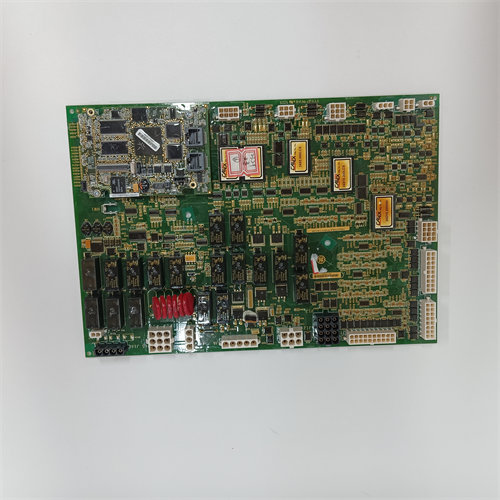
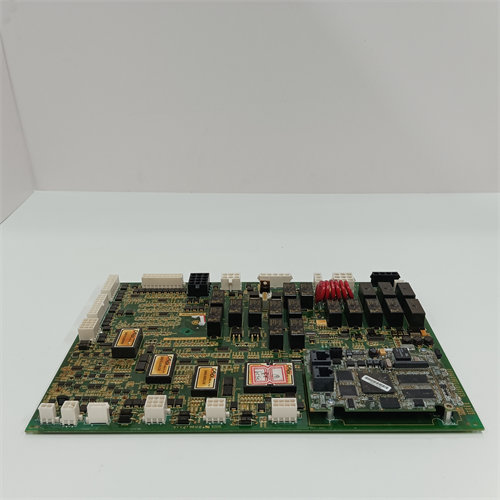
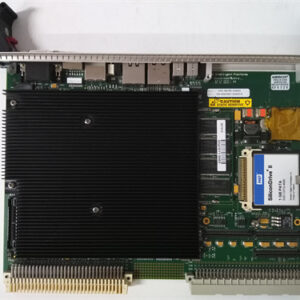
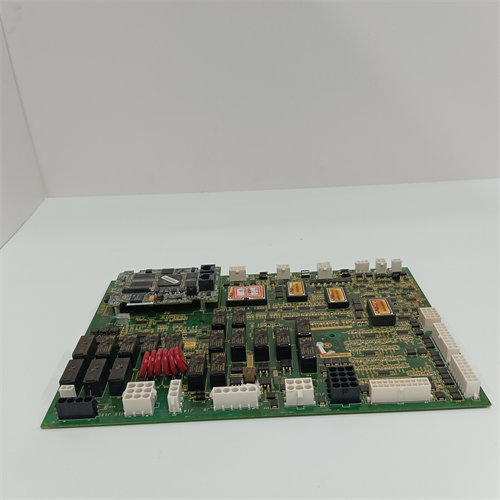
The GE DS200TCQBG2AEB is an RST Extended Analog I/O Board for the GE Mark V Speedtronic Turbine Control System.
This board is a critical component that expands the analog and pulse signal processing capabilities of the Mark V controller, specifically operating within the system’s redundant architecture.
⚙️ Board Function and Specifications
The part number indicates a board from the TCQB family in the G2 major hardware revision. The TCQB board generally handles specialized high-speed inputs, differentiating it from the primary analog I/O card (TCQA).
1. Role in the Mark V System (TCQB)
The primary role of the TCQB board, especially in the Mark V series, is to manage inputs that require fast and specific conditioning circuits:
- Pulse Rate Inputs: It processes signals from speed sensors (magnetic pickups or proximity probes) to monitor the rotational speed of the turbine and generator shafts. This is essential for both governor control and safety-critical overspeed protection logic.
- Vibration Inputs: It often includes dedicated circuitry to receive and condition AC signals from proximity transducers (Proximitors) to monitor shaft vibration and position, which is vital for machine protection.
- LVDT/LVDR Inputs: In some configurations, it handles inputs from Linear Variable Differential Transformers (LVDTs) or Rotary Variable Differential Transformers (LVDRs) to monitor valve positions.
- Analog Extension: It provides additional analog I/O capacity for signals (like standard 4-20 mA or $\pm 10 \text{V}$ inputs) that exceed the capacity of the main TCQA board.
2. RST Architecture
The RST designation confirms that this board is designed for the Triple Modular Redundancy (TMR) configuration. Three identical DS200TCQBG2AEB cards would be installed in the R, S, and T control cores, with their outputs continuously compared via the voter logic to ensure a single failure does not result in an erroneous control action or turbine trip.
3. The G2AEB Revision
- G2 (Major Revision): This indicates the second generation of the TCQB hardware, typically featuring modern component updates, layout changes, and potential improvements over the older G1 versions.
- AEB (Minor Revision Code): This is a specific combination of artwork, component, and functional sub-revisions. When replacing or repairing this component, it’s crucial to match the revision code (G2AEB) as closely as possible to maintain system compatibility and ensure the logic on the system’s PROM chips aligns with the board’s hardware.