
 +86 15340683922
 +86 15340683922
الوصف
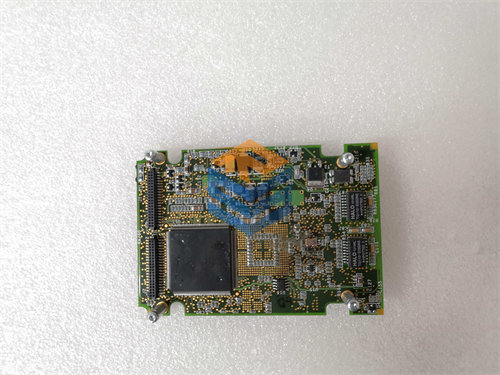
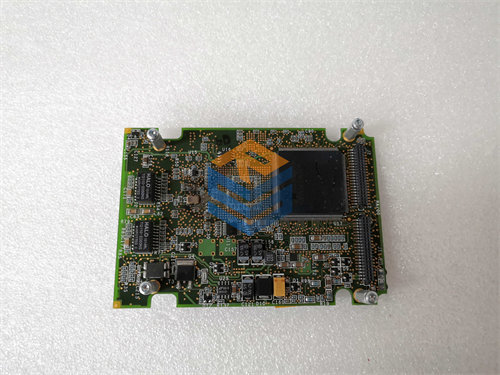
The GE DS200TCQCG1BKG is an Analog I/O Expander Board (also called an RST Overflow Board or TCQC) specifically designed for use in the GE Mark V Speedtronic Turbine Control System, particularly in applications involving the LM2500 Series Aeroderivative Gas Turbines.1
This board is a critical component within the Triple Modular Redundancy (2$\text{RST}$) control cores, where its primary job is to handle and condition “overflow” analog and pulse signals that are not managed by the main I/O boards.3
⚙️ DS200TCQCG1BKG: Functional Summary
The TCQC board’s main role is to expand the system’s ability to interface with crucial turbine sensors and actuators, providing signal conditioning, scaling, and excitation.4
| Feature | Detail |
| System | GE Mark V Speedtronic Turbine Control System |
| Target Application | LM2500 Series Aeroderivative Gas Turbine Control Systems |
| Functional Acronym | $\text{TCQC}$ (Turbine Control Q/R/S/T Core Card) |
| Dual Role | Analog I/O Expander Board / RST Overflow Board |
| Redundancy | Operates within the $\text{RST}$ (Triple Modular Redundant) cores to ensure high reliability. |
1. Core Signal Processing
The board is responsible for handling several highly-critical signals for turbine control:5
- LVDT/LVDR Excitation: It provides the necessary 6$\text{AC}$ excitation power for Linear Variable Differential Transformers (LVDTs) and Linear Variable Differential Resistors (LVDRs), which are used to measure the position of fuel and control valves.7
- Servo Valve Control: It contains circuitry to process and condition the signals for the servo valve regulators.8 This includes setting the output current range and feedback scaling for precise control of hydraulic actuators.
- Pulse Rate Inputs: It scales and conditions high-frequency inputs, such as high-pressure shaft speed signals (from magnetic pick-up or 9$\text{TTL}$ sensors) and sometimes liquid fuel flow signals.10
- Analog Scaling: It scales and conditions 11$\text{mA}$ input signals, such as those from the megawatt transducer, before sending them to other main boards (like the 12$\text{STCA}$).13
2. Technical Specifications & Connections
- I/O Capacity: It is often described as handling around 16 channels of input and 2 channels of 14$\text{DAC}$ (Digital-to-Analog Converter) output, although channel counts can vary by configuration.15
- Hardware Configuration: The board features numerous configurable components, including up to 24 jumpers (prefixed 16$\text{BJ}$ or 17$\text{JP}$), which are used to set parameters like servo output current range and magnetic pickup gain.18
- Communication: It connects to other core boards (like the 19$\text{TCQA}$ and 20$\text{STCA}$) using multiple multi-pin connectors and ribbon cables.21
- Safety Features: Like other 22$\text{TCQC}$ variants, it includes relays (such as servo clamp relays and suicide relays) which are vital for system protection and turbine trip mechanisms.23
The DS200TCQCG1BKG is fundamentally an integral expansion card that ensures the Mark $\text{V}$ system has enough analog and pulse handling capability for the complex requirements of an LM2500 turbine.