
 +86 15340683922
 +86 15340683922
الوصف
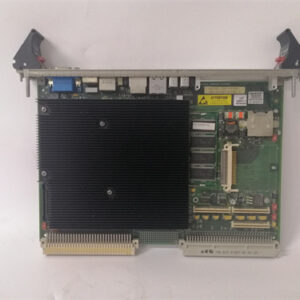
The GE DS200TCQEG1A is an I/O Processor Board, also known by its functional acronym TCQE, designed specifically for the GE Mark V Speedtronic Turbine Control System when it is applied to the LM6000 Series Aeroderivative Gas Turbines.
As an I/O Processor Board, the $\text{TCQE}$ is a highly specialized card that is fundamental to the turbine’s operation and protection, as it is one of the main processing interfaces for critical engine signals.
🚀 Key Functions of the DS200TCQEG1A (TCQE)
The DS200TCQEG1A board’s primary role is to act as an interface and signal conditioning unit for some of the most vital control and protection signals coming from the LM6000 gas turbine.
- Turbine I/O Processing: It is part of the $\text{RST}$ (Redundant Synchronous Transfer) control cores within the Mark $\text{V}$ system, handling the input/output signals that manage the turbine’s functions.
- Signal Conditioning and Scaling: The board conditions, filters, and scales raw signals from various sensors before they are passed to the main control processors ($\text{TCQA}$) and other system boards.
- Vibration and Proximitor Signals: The TCQE, or its associated termination board ($\text{TBQE}$), typically interfaces with signals from the Proximitors (proximity probes) and vibration sensors. These signals are crucial for monitoring the health and mechanical integrity of the turbine’s rotating components (like the low-pressure and high-pressure compressor shafts).
- Interface with Terminal Boards: The board connects to the system’s terminal boards (such as the DS200TBQEG1B or similar $\text{TBQE}$ variants) which receive the actual field wiring from the turbine sensors. These connections are typically made via multiple multi-pin connectors.
- System Protection: By processing and validating critical operational data like vibration, the $\text{TCQE}$ plays a direct role in the turbine’s overall protection system, enabling the control system to take protective action if parameters exceed safe limits.
💡 LM6000 Context
The $\text{LM6000}$ is a powerful, high-efficiency aeroderivative gas turbine. Its high-speed, dual-spool design means its control system, including the $\text{TCQE}$ board, must be extremely precise and fast in processing data to maintain stability and safety. The $\text{TCQE}$ is an essential link that ensures the turbine’s complex physical movements and parameters are accurately translated into digital data for the control system.