
 +86 15340683922
 +86 15340683922
الوصف
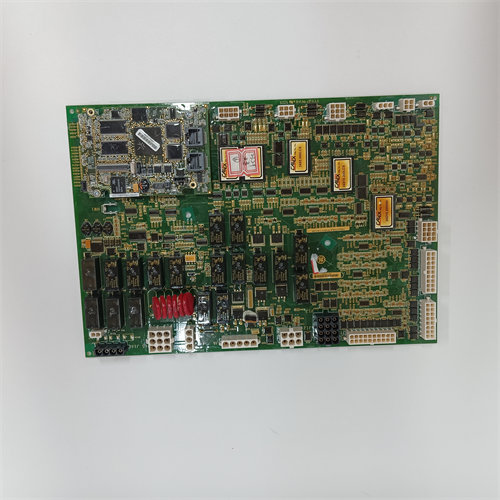
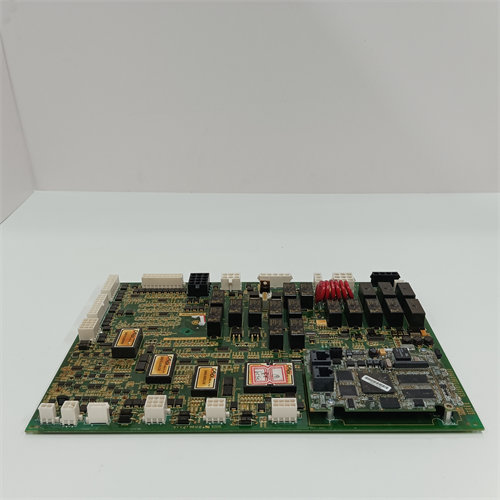
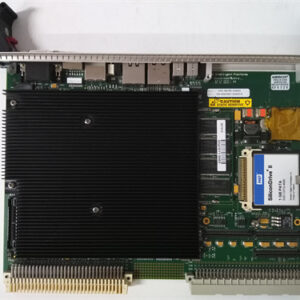
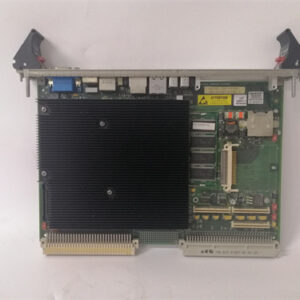
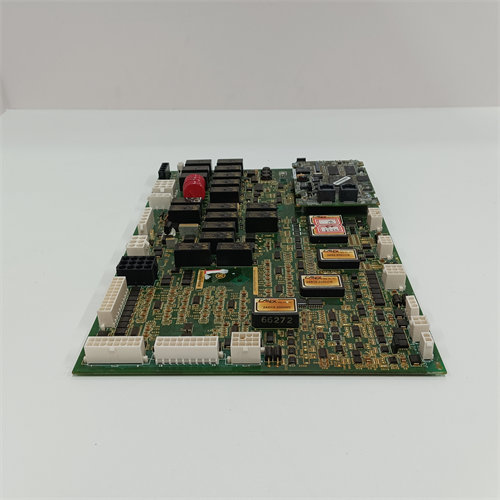
The GE DS200TCQFG1B is a specific revision of the Analog I/O Extender Card, also known by the functional acronym TCQF.
This board is an integral component of the GE Mark V Speedtronic Turbine Control System and is functionally titled the TC2000 Analog I/O Extension Card. The revision G1B indicates a minor revision or update compared to the $\text{G1A}$ board.
⚙️ Function and Role in the Mark V System
The primary function of the $\text{DS200TCQFG1B}$ is to augment the system’s analog processing capacity and is often found in Mark $\text{V}$ panels that control both the turbine and associated systems, such as the $\text{GE EX2000/TC2000}$ drive or excitation equipment.
1. Analog Signal Conditioning
- Extension: It provides additional ports for connecting and processing analog signals beyond the capacity of the main I/O cards.
- Signal Integrity: It conditions, filters, and scales a variety of analog inputs (like $\text{mA}$ and $\text{VDC}$) to ensure they are accurately represented and reliable for the digital control processors.
2. Control Loop Support
The configuration of this board is key to managing several control functions, including:
- Servo Control: It handles the I/O for elements related to servo regulator loops.
- Position Feedback: It manages the processing of position feedback signals, often related to actuator or valve positions.
- Regulator Tuning: The board’s onboard components (such as jumpers) allow for configuration of control parameters like regulator time constants.
3. Triple Redundancy (TMR)
As a $\text{TCQF}$ board, it is typically housed within one of the three redundant control cores ($\text{R, S, or T}$) of the Mark $\text{V}$ system, ensuring that analog signal processing is backed up for high system reliability.
🔑 Key Difference from G1A
The G1B revision primarily denotes internal updates to the board, which could include:
- Component obsolescence resolution.
- Minor bug fixes in the onboard firmware (stored on the EPROM).
- Changes to the physical component layout (artwork).
Functionally, the $\text{G1B}$ version is generally a direct replacement for the $\text{G1A}$ version, performing the same role of analog $\text{I/O}$ extension within the Mark $\text{V}$/$\text{TC2000}$ environment.