
 +86 15340683922
 +86 15340683922
الوصف
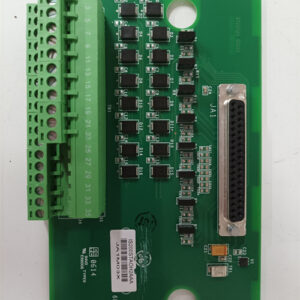
The GE DS200UPSAG1 (and its revisions like DS200UPSAG1A) is a Power Supply Board used in General Electric’s control systems, specifically integral to the 1$\text{EX2000}$ Excitation Control System and associated with the Mark V Speedtronic Turbine Control System.2
The functional acronym UPSA stands for UC2000 Power Supply Assembly or similar designation.3
⚡ Core Function and Role
The primary role of the 4$\text{DS200UPSAG1}$ is to provide stable and reliable control-level 5$\text{DC}$ power to the critical logic circuits and components within the 6$\text{EX2000}$ Excitation Control system.7
- Power Conversion: It is typically a two-stage offline switching, 8$\text{100 W}$ power supply that takes an 9$\text{AC}$ or 10$\text{DC}$ line input (depending on the system configuration) and outputs the necessary control-level voltages (e.g., 11$\text{+5 V}$, 12$\pm \text{15 V}$, 13$\pm \text{24 V}$).14
- System Integrity: By delivering reliable power, the board ensures the continuous and accurate operation of the 15$\text{EX2000}$‘s microprocessors and control boards, which are responsible for regulating the generator’s field current and maintaining stable terminal voltage.16
- Application: It is primarily used in drive systems and excitation control systems for large industrial generators (driven by gas, steam, or wind turbines).17
🛠️ Key Hardware Features (Typical for UPSA Boards)
The board is designed for high reliability in industrial settings and includes several components for monitoring and protection:18
- Protection: Features multiple fuses (e.g., three or four, with specific 19$\text{amp}$ and voltage ratings) to protect the board’s components from over-current or over-voltage conditions.20
- Diagnostic Tools:
- One or more LEDs (e.g., “PS OK” 21$\text{LED}$) to indicate when the power supply is on and operating within limits.22
- Test points for diagnostic measurements.23
- Configurable Hardware: Includes a potentiometer (24$\text{RV1}$), typically factory-set, for fine-tuning the voltage output (e.g., setting the 25$\text{+5 V}$ output).26
- Connectors: Features multiple 27$\text{9-pin}$ connectors (e.g., 28$\text{2PLC}$, 29$\text{2PLB}$, and 30$\text{2PLA}$) for connection to other boards and external systems.31
- Controls: Includes a Reset button (32$\text{SW2}$) for restarting the board without removing input power.33
This board is a common point of failure in legacy $\text{EX2000}$ systems due to the wear and tear on its switching components and capacitors over time.