
 +86 15340683922
 +86 15340683922
الوصف
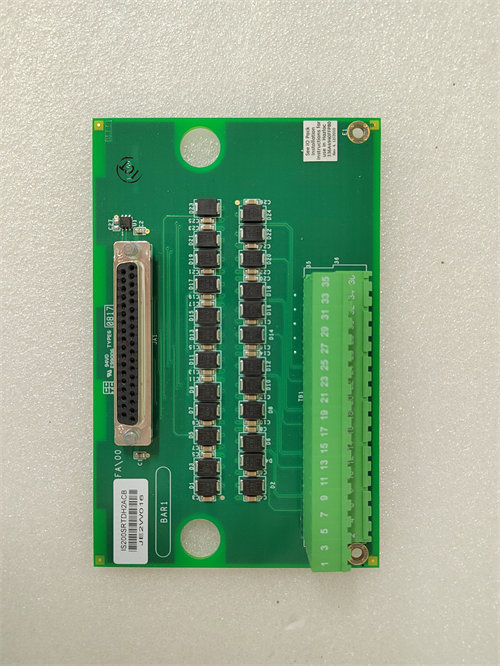
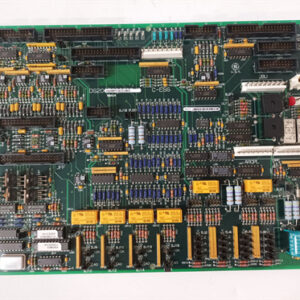
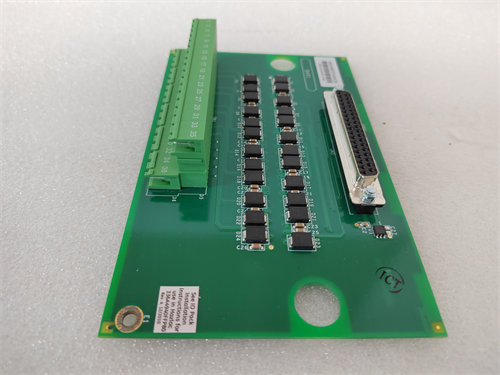
The GE IS200BAIAH1BCB is a highly specific Printed Circuit Board (PCB) known as the Bridge Application Interface Board (1$\text{BAIA}$).2 It is a critical, multi-function interface card used in General Electric’s Mark VI Speedtronic Turbine Control System and the associated Innovation Series Drive systems.3
Its primary role is to act as a communication and signal isolation bridge between the main digital signal processor (4$\text{DSPX}$ board) and the external field wiring and user interfaces.5
⚙️ Key Technical Features and Function
The 6$\text{BAIA}$ board is a VME-style card designed to plug vertically into a specific slot (often Slot 1) of the control card rack assembly.7 The suffix H1BCB denotes a precise hardware and firmware revision, which is critical for compatibility.
- Signal Isolation and Ground Reference: The board’s primary electrical function is to provide isolation and an earth-ground reference for all signal inputs coming from user terminal boards, protecting the sensitive control electronics from noise and ground potential differences in the field.8
- Communication Interface (RS-232C): It includes an RS-232C I/O interface.9 This allows the main processor (10$\text{DSPX}$) to communicate with the drive system’s keypad and PC connections for configuration, monitoring, and diagnostics.11
- Signal Conversion: It converts digital inputs received from the main processor into analog outputs.12
- Channels A and B are typically available for customer use at the terminal board.13
- Channels C and D may be used to drive panel meters.
- Analog Input Configuration: The board supports two bipolar (14$\pm 10 \text{V}$) analog input channels.15 It features four jumper switches that allow field configuration to select the input type, typically setting the analog inputs to either the VIN (voltage input) or 16$4-20 \text{mA}$ (current input) position.17
- Discrete I/O: It includes three relays (Form C contacts) for switching discrete outputs and several isolated, differential discrete logic inputs.18
⚠️ Important Considerations for Replacement
- Revision Match is Crucial: The suffix H1BCB specifies the exact revision of the board’s hardware, firmware, and artwork configuration. You must replace the board with an exact matching revision or a GE-approved substitute to ensure the correct communication protocols, signal scaling, and jumper settings are compatible with the rest of the Mark VI system.
- Slot Restriction: The 19$\text{BAIA}$ board often carries a warning to “Install in Slot 1 only” on the VME rack.20 Installing it in an incorrect slot can cause immediate and irreversible damage to the board.21
- ESD Precautions: This board is densely populated with integrated circuits and is highly static-sensitive.22 Handle it using strict Electrostatic Discharge (ESD) procedures.