
 +86 15340683922
 +86 15340683922
الوصف
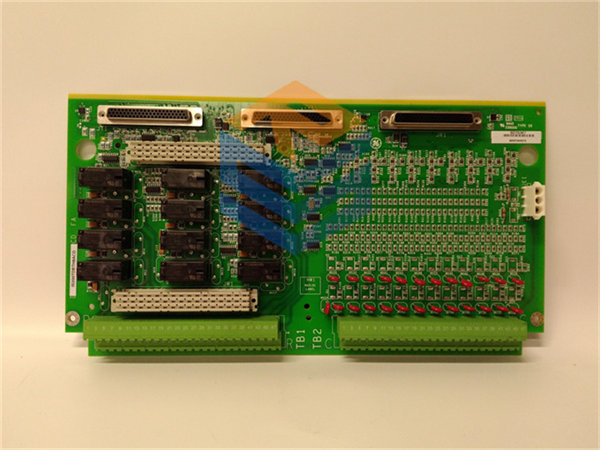
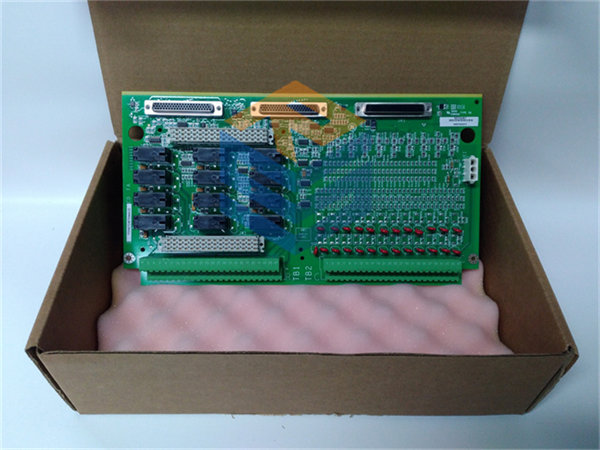
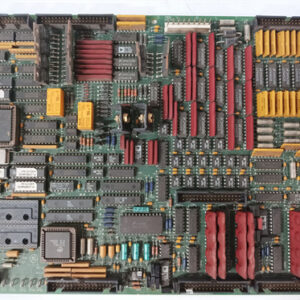
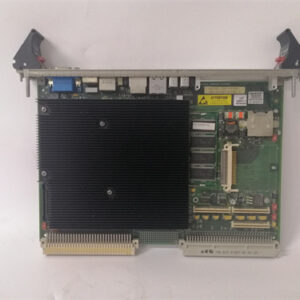
The GE IS200EBKPG1ACB Exciter Backplane Board (EBKP) is the fundamental structural and electrical backbone of the control module within the GE EX2100 Excitation Control System.
It serves as the main hub that integrates all the control boards, distributes power, and provides connectivity for all the Input/Output (I/O) terminal board cables. The suffix G1ACB denotes its specific revision and configuration.
🏗️ Core Functions and Structure
The EBKP’s design is engineered to support the high-reliability and modularity requirements of the EX2100 system, which often utilizes redundancy (TMR – Triple Modular Redundancy).
1. Control Board Integration
The backplane is logically and physically divided into three independent sections: M1, M2, and C (Control/Common).
- M1 and M2 Sections: These sections house the boards necessary for redundant control and contain identical sets of circuit boards. These typically include:
- DSPX (Digital Signal Processor)
- ACLA (Exciter Auto-Cal Board)
- EMIO (Exciter Multiple I/O)
- ESEL (Exciter Selector)
- EISB (Exciter Isolation Board)
- C Section: This section houses the boards common to all controllers, typically including:
- DSPX
- EMIO
- EISB
2. Power and Communication Distribution
The EBKP handles power and signal integrity across the system:
- Independent Power Supplies: Each of the M1, M2, and C sections has its own independent power supply input, enhancing system reliability and isolation.
- Signal Routing: It routes all communication signals, including high-speed communication between the control boards and necessary I/O signals, to and from the terminal boards.
🔌 Technical Features and Connections
The board is densely populated with various connectors to facilitate its central role:
- Control Board Connectors (Upper): The upper part of the backplane features DIN connectors where the main control boards (DSPX, ACLA, etc.) plug directly in.
- I/O and Peripheral Connectors (Lower): The lower part contains a large number of connectors for interfacing with the outside world:
- D-SUB Connectors: Used for I/O interface cables that run to the various terminal boards (like the EACF, EBAC, ECTB, etc.).
- Circular DIN Connectors: Used for connecting keypad interface cables and diagnostic tools.
- Power Plugs: Connectors for the power supply modules (EPSM) and cooling fans.
- Diagnostics: The backplane includes multiple test points (typically 30 total) strategically placed to allow technicians to access critical signals for in-depth diagnostic analysis and troubleshooting.
- Cooling: The entire backplane assembly is designed to be mounted within a rack, with two cooling fans positioned overhead to ensure the thermal stability of all installed control boards.
In essence, the IS200EBKPG1ACB is the passive electrical backbone that physically and electrically defines the architecture of the EX2100 excitation controller.