
 +86 15340683922
 +86 15340683922
الوصف
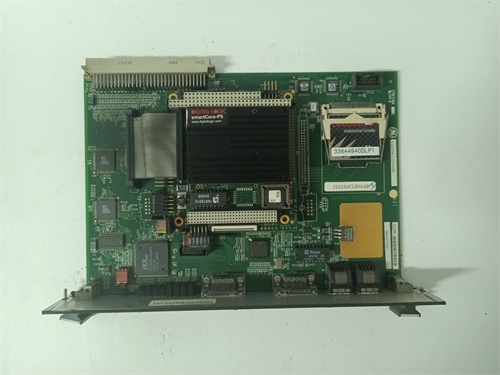
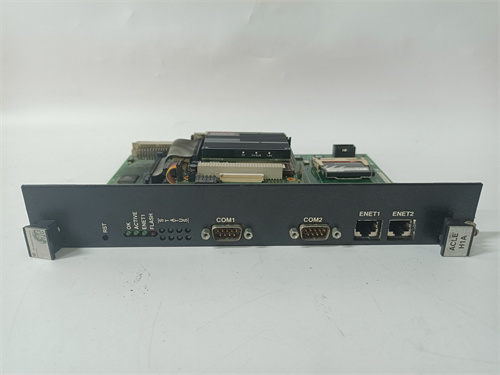
The GE IS200ESELH1AAA is the Exciter Selector Board (ESEL), not strictly a “Collector Board,” and it is an essential interface module within the GE EX2100 Excitation Control System (part of the Mark VI/VIe Speedtronic platform).1
⚙️ Primary Function (Gate Pulse Selector)
The ESEL board’s primary function is to manage and select the gate pulse signals that control the Thyristors (SCRs) in the exciter’s power bridge.
- Signal Selection: In redundant (TMR) EX2100 systems, the DSPX controllers (M1, M2, and C) all generate firing commands simultaneously. The ESEL receives these three independent sets of low-level gate pulse logic signals from the three respective Exciter Main I/O (EMIO) boards.
- Final Output Selection: It compares the three incoming signals and implements a voted selection scheme, typically choosing the signal that is not in disagreement with the other two (2-out-of-3 voting). This ensures that a single, synchronized, and validated set of gate pulse signals is forwarded.
- Gate Pulse Distribution: The ESEL then routes the selected, valid set of gate pulse logic signals via the system’s backplane to the Exciter Gate Pulse Amplifier (EGPA) boards located in the power conversion cabinet. The EGPA boards amplify the signal to the high power level required to fire the Thyristors.
- Isolation and Protection: It provides the necessary electrical isolation and protection between the sensitive control electronics and the high-voltage power electronics.
🛠️ Key Technical Details
| Feature | Detail |
| Functional Name | Exciter Selector Board (ESEL) |
| System | EX2100 Excitation Control System / Mark VI |
| Type | Gate Pulse Logic Selector and Interface |
| Input Signals | Three sets of gate pulse logic signals (from M1, M2, C EMIO boards). |
| Output Signals | One selected, validated set of gate pulse logic signals (to EGPA boards). |
| Application | Critical for synchronization and fault tolerance in redundant exciter systems. |
The ESEL is a fundamental safety and reliability component, ensuring that even if one controller or its associated EMIO board fails or generates an erroneous pulse, the healthy control signals are used to maintain generator stability.2