
 +86 15340683922
 +86 15340683922
الوصف
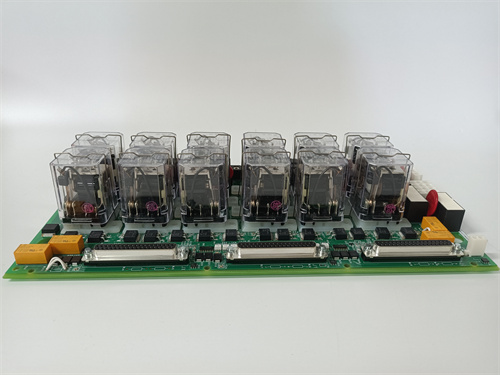
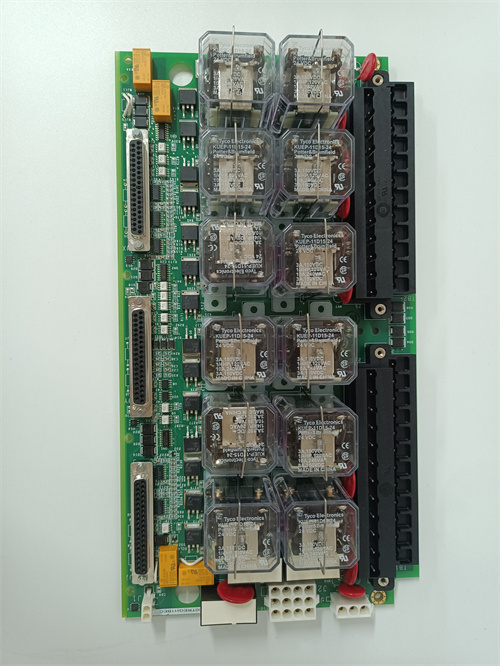
The GE Mark VI IS200EXAMG1BAA is an Exciter Attenuation Module (EXAM) that serves as a critical component in GE’s EX2100 and EX2100e Excitation Control Systems for large industrial turbine generators.1
This module is essential for protecting the generator’s field winding by detecting potentially damaging ground faults.2
💡 Primary Function
The EXAM’s primary function is to work in conjunction with the Exciter Ground Detector Module (EGDM) to implement the field ground detection system.3
- Attenuation/Scaling: It senses the high voltage from the excitation power bridge and scales (attenuates) it down to a usable, low-voltage level for the EGDM.4
- Signal Interface: It receives a low-frequency square wave signal (typically 5$\pm 50 \text{V}$) emitted by the EGDM and applies this voltage to a sense resistor network across the generator field.6
- Ground Detection: If a ground fault exists in the field winding, this fault will cause a measurable voltage deviation across the sense resistor. The EXAM detects this voltage and sends the resulting signal back to the EGDM for measurement and analysis.
This process ensures that any unwanted current leakage to ground is detected quickly, allowing the control system to take protective action before significant damage occurs to the generator’s rotor.
⚙️ Key Technical Details
- System Series: EX2100/EX2100e Excitation Control System.7
- Designation: GE Mark VI IS200 series board.8
- Mounting Location: It is typically installed within the High Voltage Interface (HVI) module, which is situated in the system’s Auxiliary Cabinet.9
- Connections: The EXAM board has various connectors, including stab-on connectors (E1 and E2) for the field bus voltages and a 9-pin cable connector for the Exciter Power Backplane (EPBP) which connects to the EGDM.10
- Redundancy: The module is designed to operate in both simplex (single) and triple modular redundant (TMR) control systems.11 In TMR systems, only one EXAM is generally required.12
- Revision: The suffix G1BAA indicates a specific revision and configuration of the Exciter Attenuation Module. The ‘B’ revision often includes features or slight hardware differences compared to the earlier ‘A’ revision, sometimes related to compatibility with Alterrex applications or other specific regulator options.13